Loading...
Pressure-Treated Wood Deck Construction in Lauderhill FL - Built to Last
Want a solid outdoor deck that fits a real budget? Pressure-treated wood is the most proven deck material on the market - built right and maintained properly, it holds up for decades even in South Florida's demanding climate.
- Licensed and Insured
- Locally Owned
- Free Estimates
- Satisfaction Guaranteed
What goes into building a pressure-treated wood deck in Lauderhill?
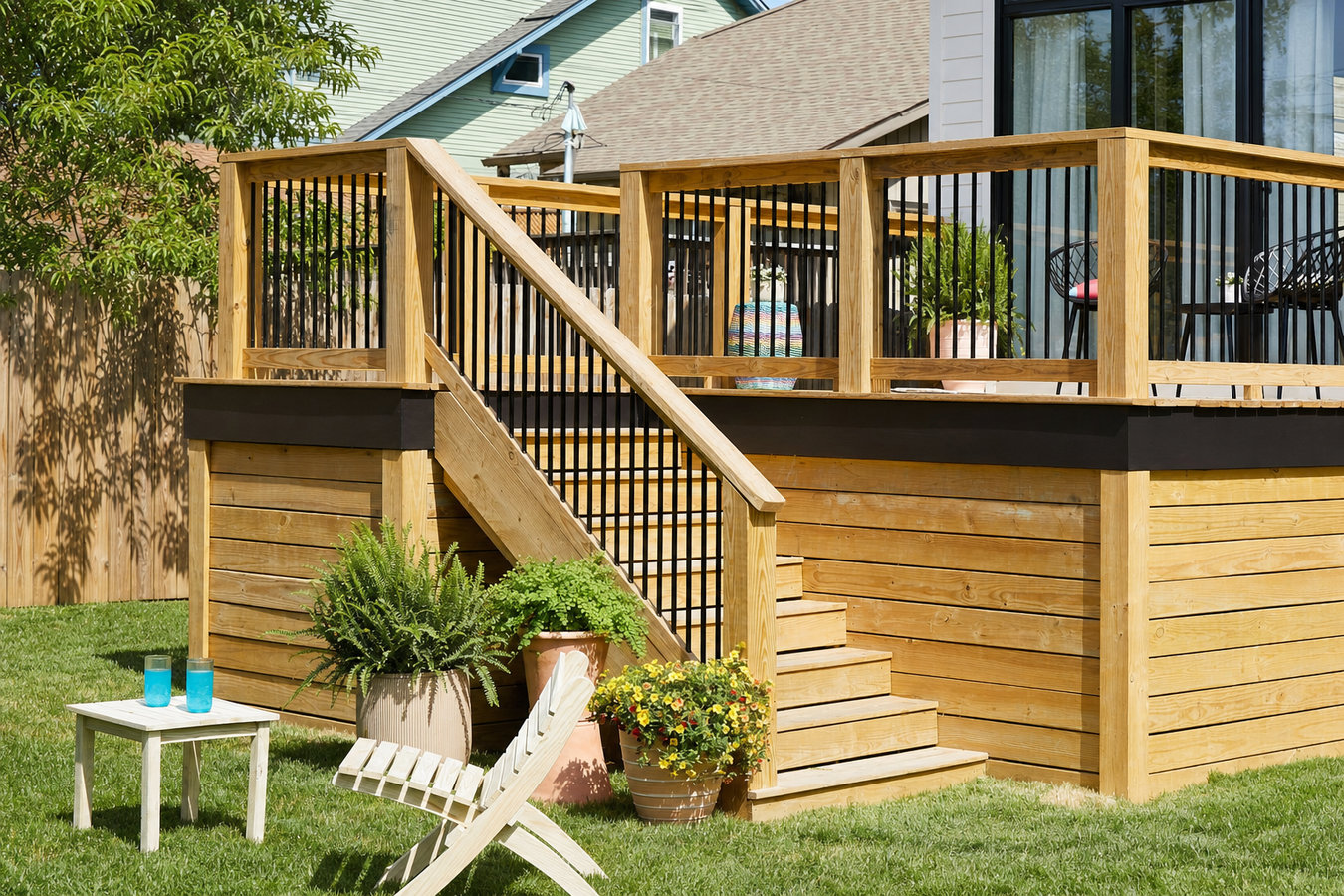
Pressure-treated wood deck construction in Lauderhill starts with digging and pouring footings, then framing the structure with treated lumber, then laying decking boards on top. Most standard residential decks take a crew of two to four people two to five days to build, from the first footing hole to the final railing post.
Pressure-treated lumber is the most widely used deck material in the country for good reason - it is cost-effective, widely available, easy to cut and customize, and when properly sealed it performs well even in humid climates like South Florida. Many Lauderhill homeowners choose it because it gives them the real-wood look they want at a price point that makes sense. If you are also weighing the low-maintenance appeal of composite, our cedar wood deck construction page covers another natural wood option worth comparing.
Every deck we build goes through Broward County's full permit and inspection process. That is not just a box to check - it is what protects your investment and makes your home easier to sell down the road.
How do you know if your outdoor space needs a new deck?
Boards feel soft or spongy underfoot
If you notice any give or softness when you walk on the deck - especially near posts or where water tends to collect - that is a sign of rot working through the wood. In Lauderhill's humid climate, rot can spread quickly once it starts. A deck that feels spongy even in one spot should be evaluated by a professional before anyone puts weight on it.
Boards cupping, cracking, or lifting
When deck boards curl up at the edges, develop long cracks running with the grain, or you can see fastener heads pulling through the surface, the boards are at the end of their useful life. In Lauderhill's heat and humidity, this type of wear tends to accelerate after the 10-to-15-year mark on decks that were never properly sealed. Patching individual boards rarely solves it at this stage.
No railing or a railing that wobbles
If your deck sits more than two and a half feet off the ground and has no railing - or has one that moves when you lean on it - it does not meet current Florida safety requirements. This is especially important if you have children or elderly family members who use the deck. Adding a railing is sometimes a standalone repair, but if the rest of the deck is aging, it often makes more sense to build new.
Backyard goes unused year-round
Many Lauderhill homes were built with small or no patio areas, and a backyard that sits empty most of the year is a missed opportunity when the weather cooperates almost 12 months a year. If you find yourself wishing you had a place to sit outside, grill, or entertain, a deck is the most direct solution. This is the most common reason homeowners in South Florida decide to build - not repair.
What we offer with pressure-treated wood deck construction in Lauderhill
We build pressure-treated wood decks from the ground up - footings, framing, decking boards, railings, and stairs - handling the full permit process with Broward County from start to finish. The lumber used for framing, posts, and any material that sits near the ground is rated for ground contact, which matters in South Florida's termite-active environment. For homeowners who want the natural wood feel with less long-term upkeep, we can also discuss sealing options and walk you through what maintenance will look like after the build is complete.
If you plan to stain or seal the deck after construction, keep in mind that freshly installed pressure-treated lumber needs four to six weeks to dry before a finish can be applied properly. We also offer deck staining and sealing as a follow-on service once the wood is ready, so your deck gets the protection it needs from day one.
Ground-level deck builds
Low-profile decks that sit close to grade - ideal for yards with minimal slope and homeowners who prefer easy step-on access.
Elevated decks with stairs
Raised decks with stair access, suitable for homes with split-level yards or first-floor doors that sit above the ground.
Railing installation
Pressure-treated or composite railing systems built to current Broward County railing height and baluster spacing requirements.
Deck sealing and finishing
Once your treated lumber dries, a water-repellent sealer protects against South Florida's UV exposure and heavy seasonal rain.
Why pressure-treated wood deck construction still makes sense in Lauderhill, FL
Lauderhill is in Broward County's high-wind zone, which means decks here must be built with specific hardware and connection methods to meet Florida's wind-load requirements - more involved than deck builds in most other parts of the country. Pressure-treated framing is actually the standard substrate used under composite and Trex decks for exactly this reason: it is strong, it handles the hardware well, and when the framing is done right the whole deck is more stable. Termite pressure in Broward County is also among the highest in the United States, so we pay close attention to the ground-contact rating of every post and framing member that sits near soil.
The homes we build for most in this area were constructed between the 1960s and 1980s - the type of low-slung ranch homes with small concrete slabs that were never designed as real outdoor living spaces. Homeowners near Tamarac and in North Lauderdale regularly ask us to remove those original slabs and start fresh with a proper deck. We handle demo as part of the project when needed, and we coordinate with the county on any utility clearance required before footings go in.
What happens when you call for pressure-treated deck construction in Lauderhill?
1
First call and free estimate visit
We will get back to you within one business day. The in-person visit covers measuring the space, checking ground conditions, and talking through your ideas - no cost, no obligation.
2
Permit application and approval
We submit the plans and application to the City of Lauderhill and Broward County. Review typically takes two to four weeks. We keep you updated throughout - you should not have to chase us for status.
3
Footings, framing, and decking
Work starts with footing holes and concrete anchors, then the frame goes up. Once framing passes its required county inspection, boards are laid and railings are installed. Most standard decks wrap up in two to five working days.
4
Final inspection and handoff
We schedule the county inspector - you do not need to arrange it. After the inspection passes, we walk you through care instructions including when the wood will be ready to seal, then leave the site clean.
Ready to get your pressure-treated deck estimate in Lauderhill?
No obligation. We will visit your property, walk through your ideas, and give you a written quote - typically within one business day of your first message.
(754) 306-0957Why Lauderhill homeowners call Lauderhill Fence & Deck for pressure-treated deck construction
Full permit handling, start to finish
We submit every permit application and coordinate every required county inspection on your behalf. A fully permitted deck is documented, legally compliant, and will not become a problem when you sell your home or file an insurance claim down the road.
Ground-contact lumber rated for South Florida
Broward County has some of the highest termite pressure in the country. Every post and framing member that sits near soil is rated for ground contact, which is the appropriate standard for the conditions here - not just the minimum required by code.
Built to Florida wind-load standards
Decks in Broward County must meet specific wind-resistance requirements. We use the correct anchors and connection hardware from the start, so your deck passes inspection the first time and stays put when a storm comes through.
HOA rules reviewed before plans are drawn
Many of Lauderhill's established neighborhoods have HOA restrictions on deck size, color, and placement. We ask about your HOA requirements at the very beginning and design around those rules - so you are not facing a demand to modify a finished deck. You can review deck building standards at the North American Deck and Railing Association (NADRA) at nadra.org.
Every point above reflects a real risk Lauderhill homeowners face - permits, termites, hurricanes, and HOA approvals are not theoretical concerns here. We handle them upfront so you are not dealing with them after the fact. You can verify contractor licenses through the Florida Department of Business and Professional Regulation and review current building standards at the Florida Building Commission.
Frequently asked questions
Cedar wood deck construction
Cedar offers natural resistance to moisture and insects and a rich wood appearance - a premium natural wood alternative for homeowners who want a step up from standard pressure-treated.
Learn MoreDeck staining and sealing
Protect your new pressure-treated deck once the lumber dries - a proper water-repellent sealer dramatically extends the life of wood decks in South Florida's UV-heavy climate.
Learn MoreGet Your Lauderhill Deck Started Before the Season Fills Up
Permit season in Broward County moves fast - the sooner you reach out, the sooner we can get your plans submitted and your project on the schedule.